Matcha in Istanbul: Seven Flavours on Sultanahmet Square for Non-Coffee Drinkers
You can get a properly whisked matcha within a minute of the Obelisk on Sultanahmet Square: Roots & Roasted serves seven matcha drinks — plain Matcha at ₺540 and six flavoured versions at ₺660 — alongside its specialty coffee, every day from 09:00 to 19:00. Not everyone travelling with a coffee drinker is a coffee drinker, and Istanbul, for all its tea and coffee culture, has not always had a good answer for them. This post is that answer, and an honest note on why it costs what it costs.
What matcha actually is
Matcha is green tea in a different form. A few weeks before harvest the tea plants are shaded from the sun, which slows growth and pushes chlorophyll and amino acids into the leaves; the leaves are then steamed, dried, stripped of stems and veins, and ground between stone mills into a powder fine enough to suspend in water. Because you drink the whole leaf rather than an infusion of it, matcha tastes and behaves differently from any other tea: deep green, grassy and savoury at first, sweet at the finish, with a caffeine lift that arrives more slowly and lasts longer than espresso, softened by the amino acid L-theanine.
The tradition is Japanese, and the best-known growing region is Uji, near Kyoto. The powder is whisked, not stirred, with a bamboo chasen, to a smooth, foamed liquid before anything else goes in.
The seven on our board
The plain Matcha (₺540) is where to start if you already know you like it: nothing between you and the tea. The six flavoured matchas are ₺660 each — Strawberry, Caramel, Vanilla, Hazelnut, Mango and Passion Fruit — and each has a natural audience.
- Vanilla or Caramel for a first matcha: they round off the grassy edge without hiding it.
- Strawberry for the photograph. It is the pink-and-green one you will see on other tables.
- Mango or Passion Fruit on a hot afternoon, when something bright and tropical suits the square.
- Hazelnut for the coffee drinker crossing over: it sits closest to the flavours they already know.
Oat or almond milk is ₺90 extra for any of them. The full list is on the menu page.
Why matcha costs more than coffee
A matcha at ₺540 next to an espresso at ₺280 raises an obvious question, and the answer is the powder. Shading the plants, hand-picking the leaves, steaming and drying them and grinding them slowly on stone mills produces a small quantity of tea at a high cost, and quality matcha is imported. A single serving uses far more of that expensive raw material, by value, than a shot of espresso uses of coffee. A matcha that tastes clean and whisks smooth costs what it costs, and the price reflects that rather than a mark-up on novelty.
Tea in a tea country
Turkey drinks more tea per person than almost any country on earth, but Turkish tea is black, brewed strong in a two-tiered çaydanlık and poured into tulip glasses — our Turkish Tea is ₺160 for exactly that. Matcha comes from the other end of the tea world, and what the two traditions share is the idea that tea is a ritual: something prepared in front of you, with the right tools, at the right pace. If you drink a Turkish tea in the morning and a matcha in the afternoon, you have covered the whole spectrum without leaving the square.
When to have it
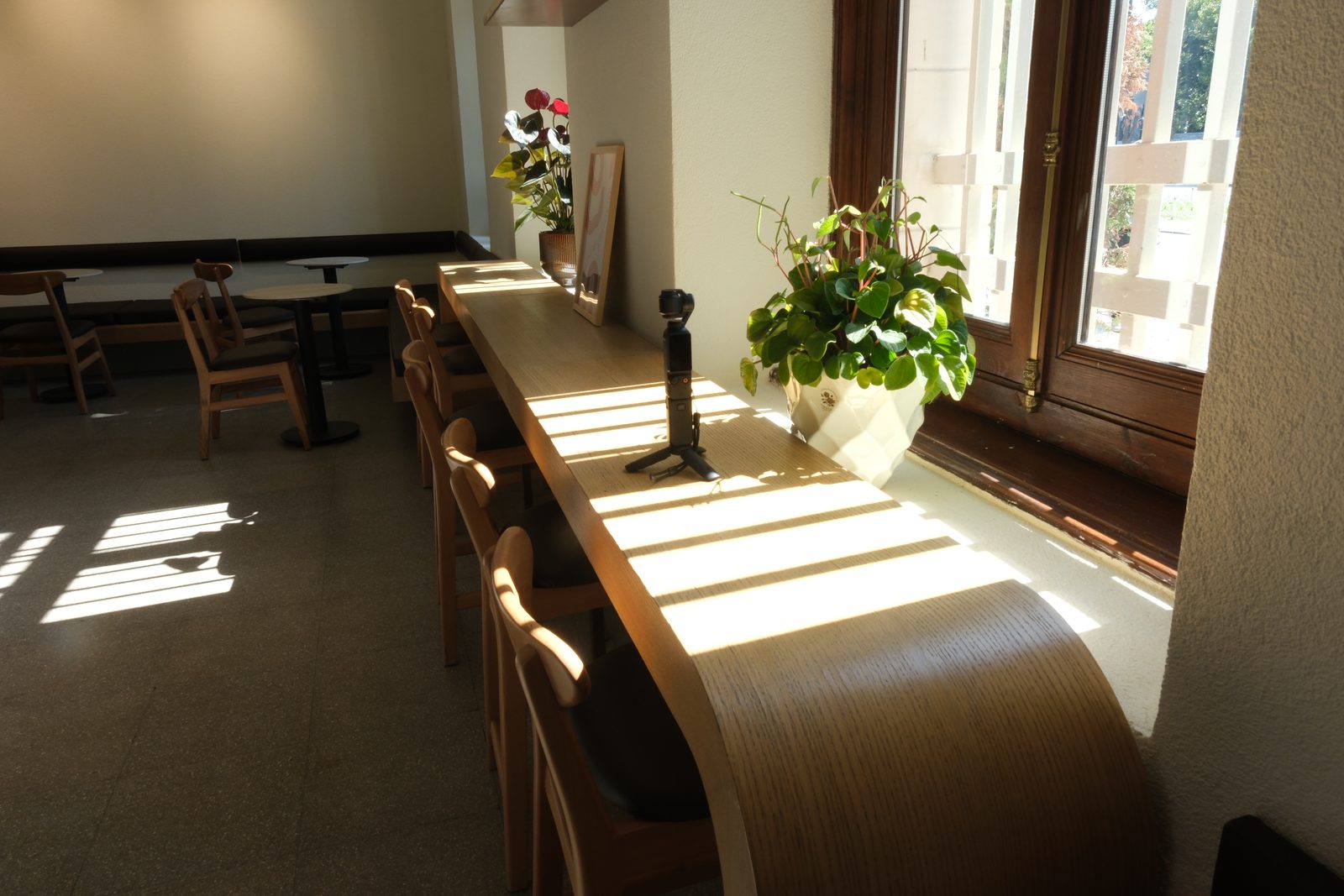
Matcha is the afternoon drink. After a morning of Hagia Sophia and the Blue Mosque and a coffee or two, a third espresso at four o’clock is more than most people want, and matcha gives a gentler, longer lift that will not keep you awake at midnight. Take it at a window table — the afternoon light on the wooden benches inside is in our gallery — or on the terrace with the minarets across the square.
We are at At Meydanı Cd. No:10/1, beside the Hagia Sophia ticket office. Whichever of the seven you choose, we whisk it to order.