Basics
How to Make Turkish Coffee at Home (Cezve Method)
Thick, foamy Turkish coffee brewed slowly in a cezve, the traditional way — and how to order it: sade, az şekerli, orta or şekerli.
Ingredients
- 1 heaped teaspoon (about 7 g) Turkish coffee, ground powder-fine, per cup
- 1 Turkish coffee cup (about 60 ml) of cold water, per cup
- Sugar to taste: none (sade), half a teaspoon (az şekerli), 1 teaspoon (orta) or 2 teaspoons (şekerli)
- Optional: a pinch of ground cardamom
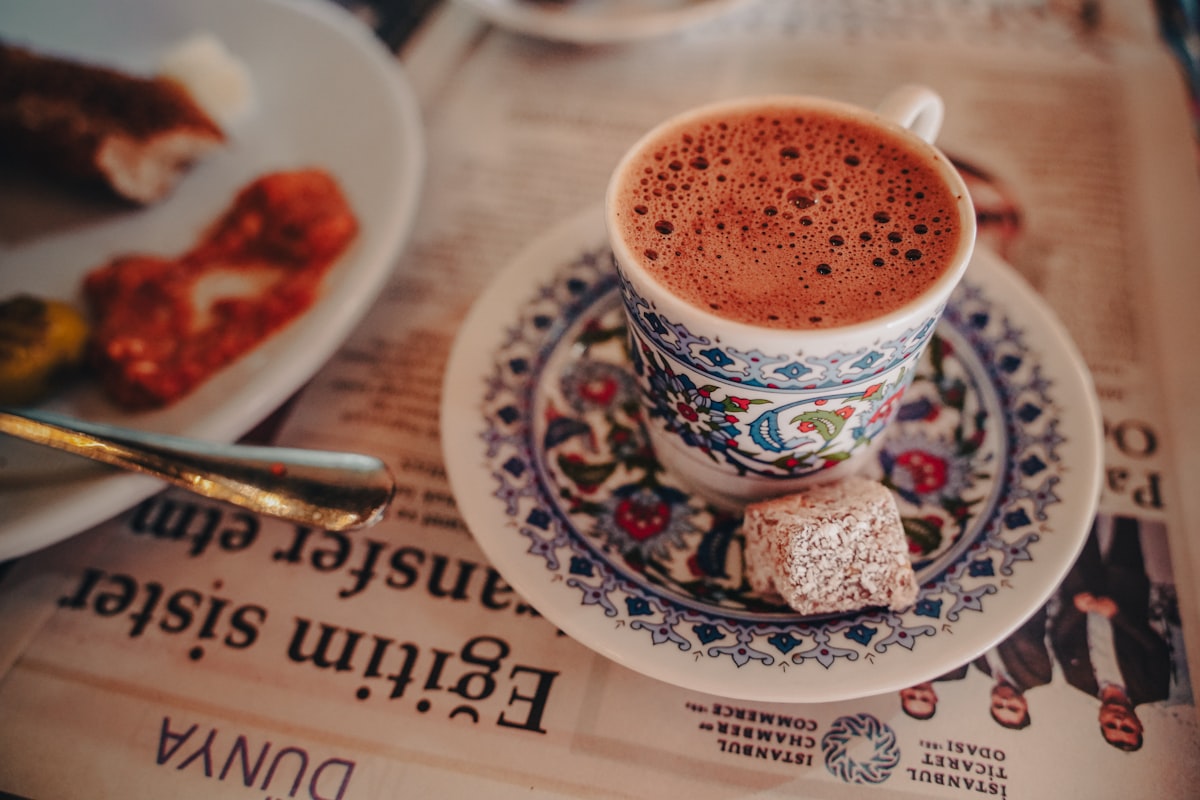
- To serve: a glass of cold water and a piece of lokum (Turkish delight)
Steps
- Measure the cold water with the cup you will serve in, and pour it into a small cezve (the long-handled copper pot).
- Add the coffee and the sugar, if using, to the cold water. Stir until the grounds are wet and no lumps remain — this is the only time you stir.
- Set the cezve over low heat and leave it alone. Low heat is what builds a thick, even foam; rushing it gives you a flat cup.
- Watch closely. As the foam rises towards the rim — before it boils — lift the cezve off the heat and spoon a little foam into each cup.
- Return the cezve to the heat, let it rise once more, then pour slowly into the cup so the foam settles on top.
- Serve with a glass of water and something sweet. Let the grounds sink for a minute, and leave the last thick sip in the cup.
Tips
- The grind must be finer than espresso — a true powder. Ask for a Turkish grind, or use a brass hand mill.
- Never let it boil. A rolling boil destroys the foam, and the foam is the whole point.
- Sugar goes in at the start. You cannot add it later without stirring the foam away.
Turkish coffee is the oldest way of brewing coffee still in daily use, and in Istanbul it is a ritual before it is a drink. The grounds are never filtered out: coffee ground to a powder is simmered slowly with cold water in a small pot called a cezve, poured unfiltered into a tiny cup, and left to settle. What you get is dense, aromatic and topped with a layer of foam that any Turkish grandmother will inspect before she says a word about the taste. The method was added to UNESCO’s list of intangible cultural heritage in 2013 — which tells you it is about hospitality as much as caffeine.
How to order it
The one thing every visitor should know: the sugar goes into the pot, not the cup, so you have to say how sweet you want it when you order. There are four words to learn.
- Sade — plain, no sugar. Strong and slightly bitter; the choice of most regulars.
- Az şekerli — a little sugar, about half a teaspoon. Rounds off the edge without tasting sweet.
- Orta — medium, one teaspoon. The most common order, and a good place to start.
- Şekerli — sweet, two teaspoons. Dessert in a cup.
At home, the same rule applies: decide before the pot goes on the heat. If someone at the table wants it plain and someone wants it sweet, you brew two pots. There is no shortcut, and no self-respecting host would stir sugar into a finished cup.
Why the foam matters
The foam (köpük) forms as the fine grounds heat slowly and release gas; it only builds if the heat is gentle and the coffee is never boiled. A cup with no foam is considered a small failure, so most of the technique above is really about protecting it: cold water to start, a low flame, no stirring after the first mix, and lifting the pot the instant the foam climbs. Spooning that first rise into the cup before the second is the old trick for a thick, unbroken cap.
The coffee itself is usually a medium-roasted arabica ground to a flour-like powder. If you cannot find bagged Turkish coffee, ask a roaster to grind a Brazilian or Ethiopian bean as fine as their grinder will go; it will not be quite as fine, but it works.
Drinking it properly
Turkish coffee arrives with a glass of water and often a piece of lokum. Sip the water first to clear your palate, then drink the coffee slowly — never in one go — and stop when you reach the sludge at the bottom. That thick layer is what fortune-tellers read: the cup is turned upside down on the saucer, left to cool, and the patterns inside are interpreted. Whether you believe it or not, it is a good excuse for another ten minutes at the table.
We brew ours the traditional way, in a cezve on the bar, and it is on our menu every day on Sultanahmet Square. Come in, tell us sade, orta or şekerli, and we will do the rest — see the menu.