
Basics
How to Make Espresso: Dose, Yield and Time
The 18 g in, 36 g out, 25–30 second espresso recipe our baristas dial in every morning — and how to fix a sour or bitter shot.
Ingredients
- 18 g freshly roasted coffee, ground fine for espresso
- Filtered water in the machine, brewing at about 93 °C
- A scale that reads to 0.1 g, and a timer
Steps
- Warm up the machine fully, run a short blank shot through the group head, then wipe the portafilter basket dry.
- Weigh 18 g of coffee into the basket. Distribute it evenly — tap the sides or use a distribution tool — and tamp level with firm, even pressure.
- Lock in the portafilter, put the cup on the scale, and start the shot and the timer at the same moment.
- Aim for 36 g of espresso in the cup in 25–30 seconds: a 1:2 ratio. Stop the shot on weight, not on how it looks.
- Taste it. Sour, thin or salty: grind finer. Bitter, harsh or dry: grind coarser. Change one thing at a time and pull again.
- Swirl the cup and drink within a minute, while the crema is whole and the shot is still hot.
Tips
- Freshness beats equipment: use beans roasted in the last one to five weeks, and grind right before you brew.
- Keep the dose fixed and adjust the grind — that is how baristas dial in each morning.
- Pre-ground supermarket coffee will never build crema; it lost its gas long ago.
Espresso is not a bean or a roast; it is a method — hot water forced through finely ground coffee at around nine bars of pressure for less than half a minute. Done well, it is a small, syrupy cup with a hazelnut-coloured crema and a flavour that manages to be sweet, sharp and bitter at once. Done badly, it is the reason many people think they do not like coffee. The difference is almost entirely in three numbers: how much coffee goes in, how much liquid comes out, and how long it takes.
The three numbers
Dose is the weight of dry coffee in the basket. We use 18 g in a standard double basket; most home machines are happy between 16 and 20 g. Yield is the weight of espresso in the cup. Time is how long the shot runs from the moment the pump starts. The classic starting recipe is a 1:2 ratio — 18 g in, 36 g out — in 25 to 30 seconds. Write those three numbers down; everything else is adjusting them.
The reason we weigh the output rather than measuring volume is crema. Crema is mostly gas, and fresh coffee makes a lot of it, so a shot that “looks like 60 ml” might weigh 30 g or 45 g. A cheap 0.1 g scale under the cup removes the guesswork.
Dialling in
Every bag of coffee is slightly different, and the same bag changes as it ages, so baristas “dial in” each morning: pull a shot, taste, adjust the grind, repeat. The rule of thumb is simple. If the shot ran too fast and tastes sour or thin, the water passed through too easily — grind finer. If it ran too slow and tastes bitter, harsh or dry, the water struggled — grind coarser. Keep the dose the same while you do this, otherwise you are changing two variables at once and learning nothing.
Ignore time for a moment and trust taste. A 22-second shot that tastes balanced is a good shot; a 28-second shot that tastes like ash is not, however “correct” the number looks.
Beans and freshness
Espresso is unforgiving of stale coffee. Roasted beans keep releasing carbon dioxide for weeks; that gas is what forms the crema and carries a lot of the aroma. Beans roasted one to five weeks ago are in the sweet spot. Older than two months and the crema thins, the shot tastes flat, and no amount of grinding will bring it back. Buy small bags, keep them sealed and away from light, and grind only what you are about to use.
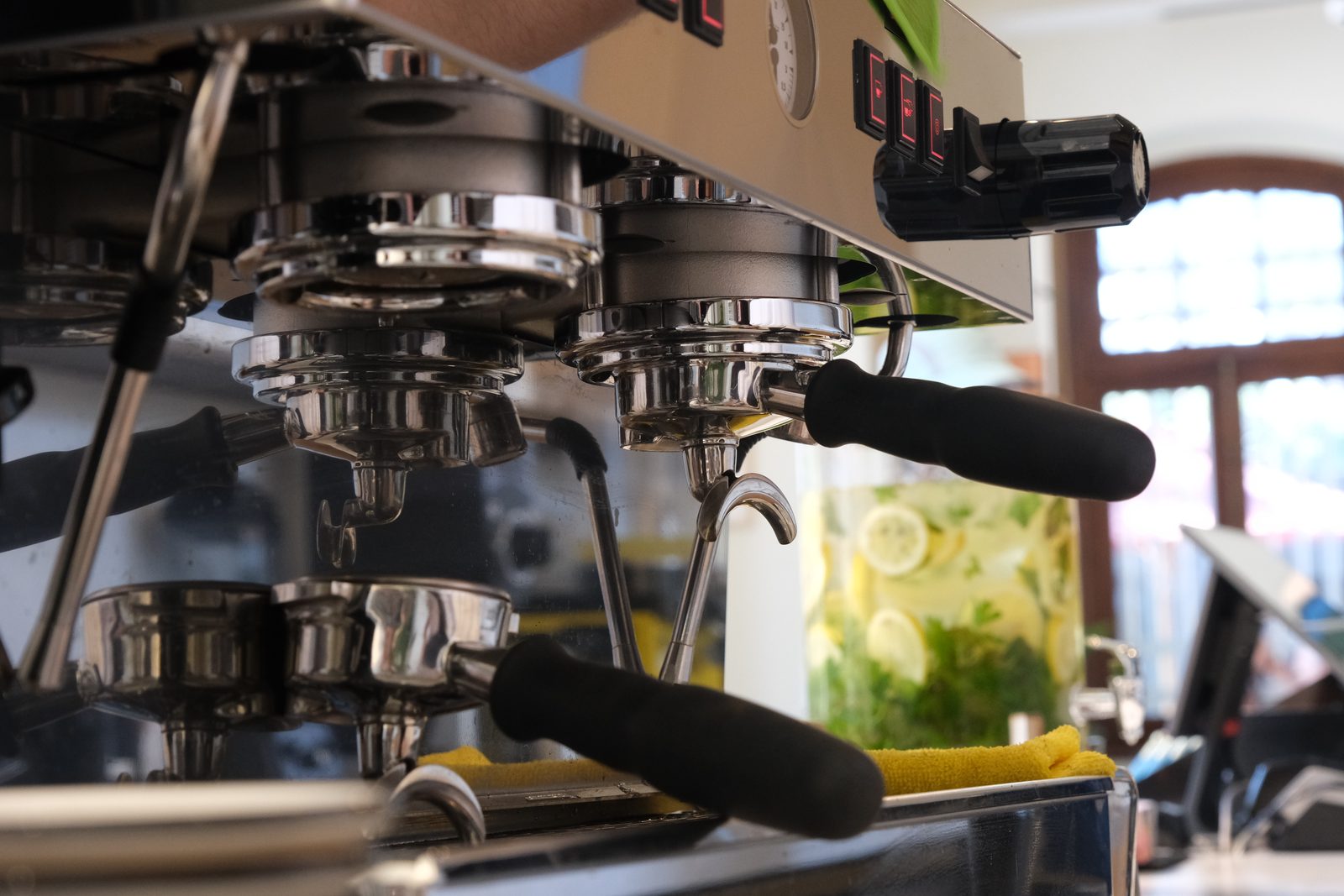
Our own beans come from Calibre Coffee, the Istanbul roastery behind the 2023 World Coffee Roasting Championship runner-up, and the shot above is exactly how we pull them behind the bar — 18 in, 36 out, tasted every morning before we open. If you would rather try the reference version before dialling in your own, it is on our menu every day — see the menu.