Simit and Turkish Tea: The Classic Istanbul Breakfast, Explained
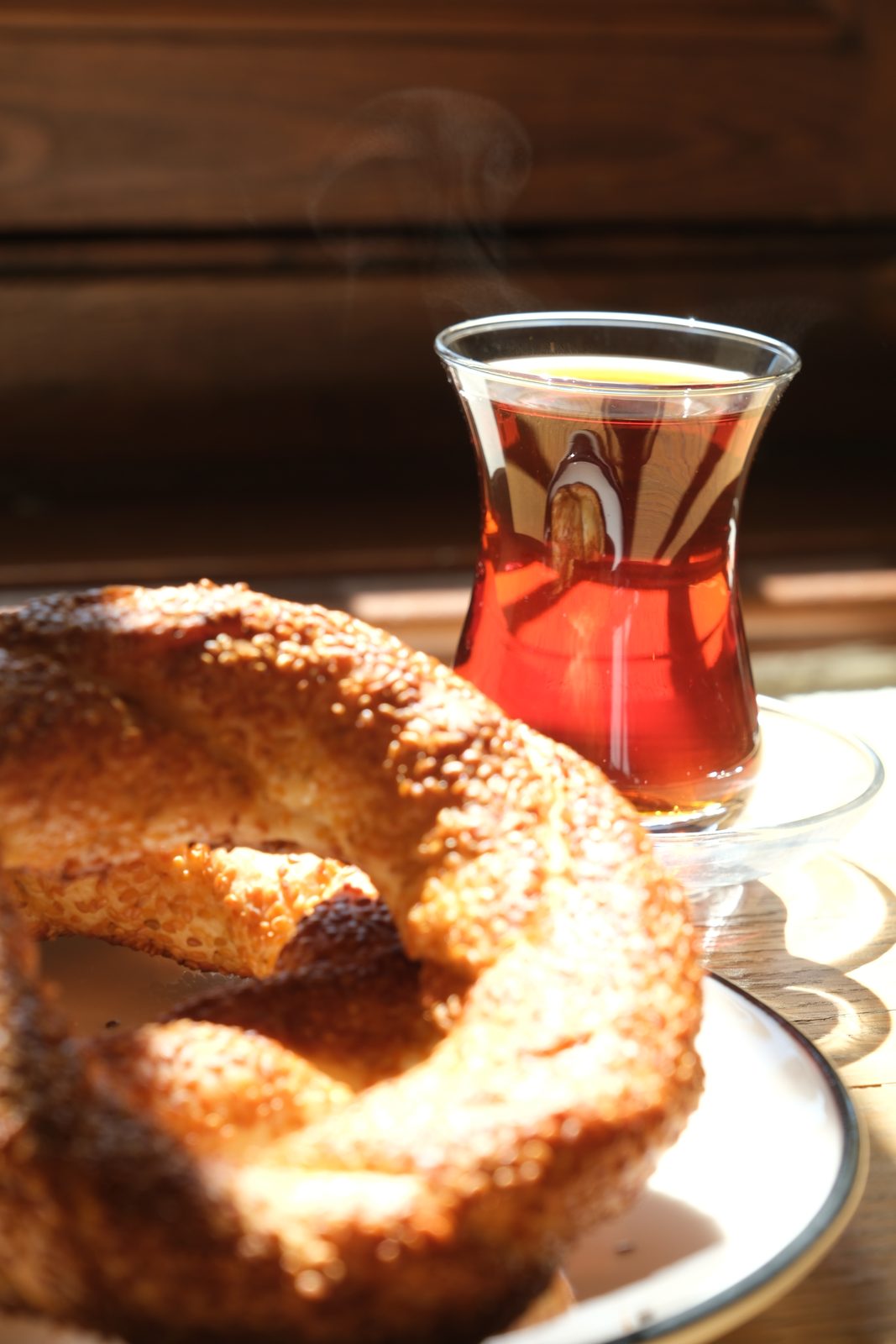
The classic Istanbul breakfast is a sesame-crusted simit and a glass of Turkish tea, eaten standing at a ferry rail, on a park bench, or — if you are on Sultanahmet Square at nine in the morning — at a window table with the Hippodrome outside. It costs less than almost anything else you will buy in the city, it has been the same for centuries, and it explains more about how Istanbul works than any museum. Here is what you are holding.
What simit is
Simit is a ring of bread dough dipped in diluted grape molasses, rolled in sesame seeds and baked until the crust shatters. Visitors call it a Turkish bagel, which is close but wrong: it is thinner, crisper, faintly sweet from the molasses, and it is never sliced. You tear it. Simit sellers have been part of the Istanbul street since Ottoman times — the trade appears in records from the sixteenth century — and the red carts and glass-fronted boxes you will see on every corner are the modern version.
Plain simit with tea is the minimum. Add a wedge of white cheese, a tomato and a few olives and you have the whole breakfast.
Why the tea comes in that glass
Turkish tea, çay, is brewed in a two-tiered kettle called a çaydanlık: strong concentrate in the small pot on top, boiling water below. The server pours a little concentrate and tops it up with water, so you can ask for it açık (light) or koyu (dark). The right colour has a name — tavşan kanı, rabbit’s blood — a clear, deep red-brown.
It is served in the ince belli bardak, the thin-waisted tulip glass. The shape is not decorative. The narrow waist keeps the base hot while the rim cools enough to hold, and the clear glass shows the colour, which is how you judge a brew before tasting it. Two sugar cubes sit on the saucer; nobody adds milk. The tea itself is grown on Turkey’s Black Sea coast around Rize, where it has been cultivated since the 1930s, and Turks drink more of it per person than almost anyone on earth.
Why tea is ₺160 and coffee is ₺280
Guests sometimes notice that our Turkish Tea is ₺160 while an Espresso is ₺280 and a Flat White ₺340, and ask why. The answer is culture, not cost-cutting. Tea in Turkey is social currency. A glass is small, refilled without asking, and offered to everyone: in carpet shops, at the barber, across the desk during a negotiation. It is priced to be poured all day, and we price it that way on purpose.
Coffee is a different object. Each cup starts with a weighed dose of beans roasted by Calibre Coffee, the Istanbul roastery behind the 2023 World Coffee Roasting Championship runner-up, ground to order, extracted by a barista who has already dialled the grinder in that morning. That is what ₺280 buys. Both prices are honest; they are just measuring different things.
If you prefer a bigger serving, the Cup of Turkish Tea is ₺250.
How to have it at Roots & Roasted
We open at 09:00, when the square is still quiet and the light comes through the windows at a low angle — the window tables are the best seats in the house at that hour. Order tea in the glass, and in the mornings ask at the counter for simit to go with it. Sit by the window, tear, dip nothing, drink slowly. You can see the room and the terrace in our gallery before you come.
Then, coffee
The Turkish word for breakfast, kahvaltı, means “before coffee”, and the country still takes the sequence seriously. Once the tea glass is empty, the espresso machine is ten steps away. An Espresso at ₺280, a Cortado at ₺340 or a Turkish Coffee at ₺370 finishes the meal the way it is supposed to be finished. The full board is on the menu page.
Then walk out onto the Hippodrome. The Obelisk is a minute away, and the day is yours.